
Why FAT, SAT and commissioning should live in one operational record
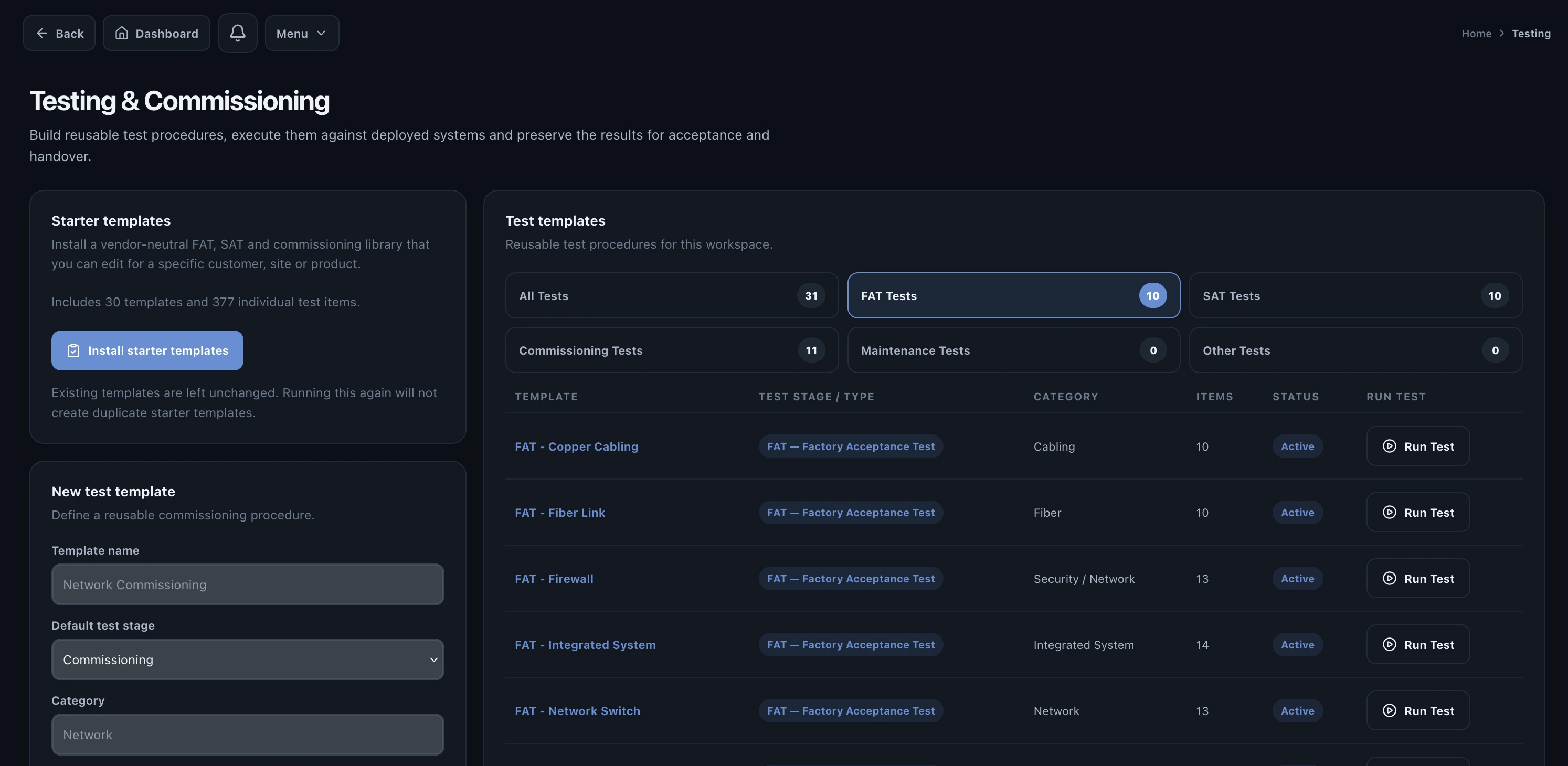
FAT, SAT and commissioning are different stages, but they describe the same delivered system. Treating each stage as an independent file set creates repeated data entry and makes it harder to understand the complete technical history. A connected operational record lets each stage retain its own procedures and approvals while sharing the identity, evidence and issue history of the system being delivered.
The problem with separate records
It is common for factory tests to live in one workbook, site tests in another and commissioning results in a set of Word or PDF documents. The system identity is copied between them, serial numbers are re-entered and issue references may or may not be carried forward. Every handoff creates an opportunity for information to diverge.
The result is not necessarily bad testing. It is weak continuity. A reviewer can see that individual tests passed but may struggle to answer how a factory exception was handled at site or whether a component replacement changed the configuration before final acceptance.
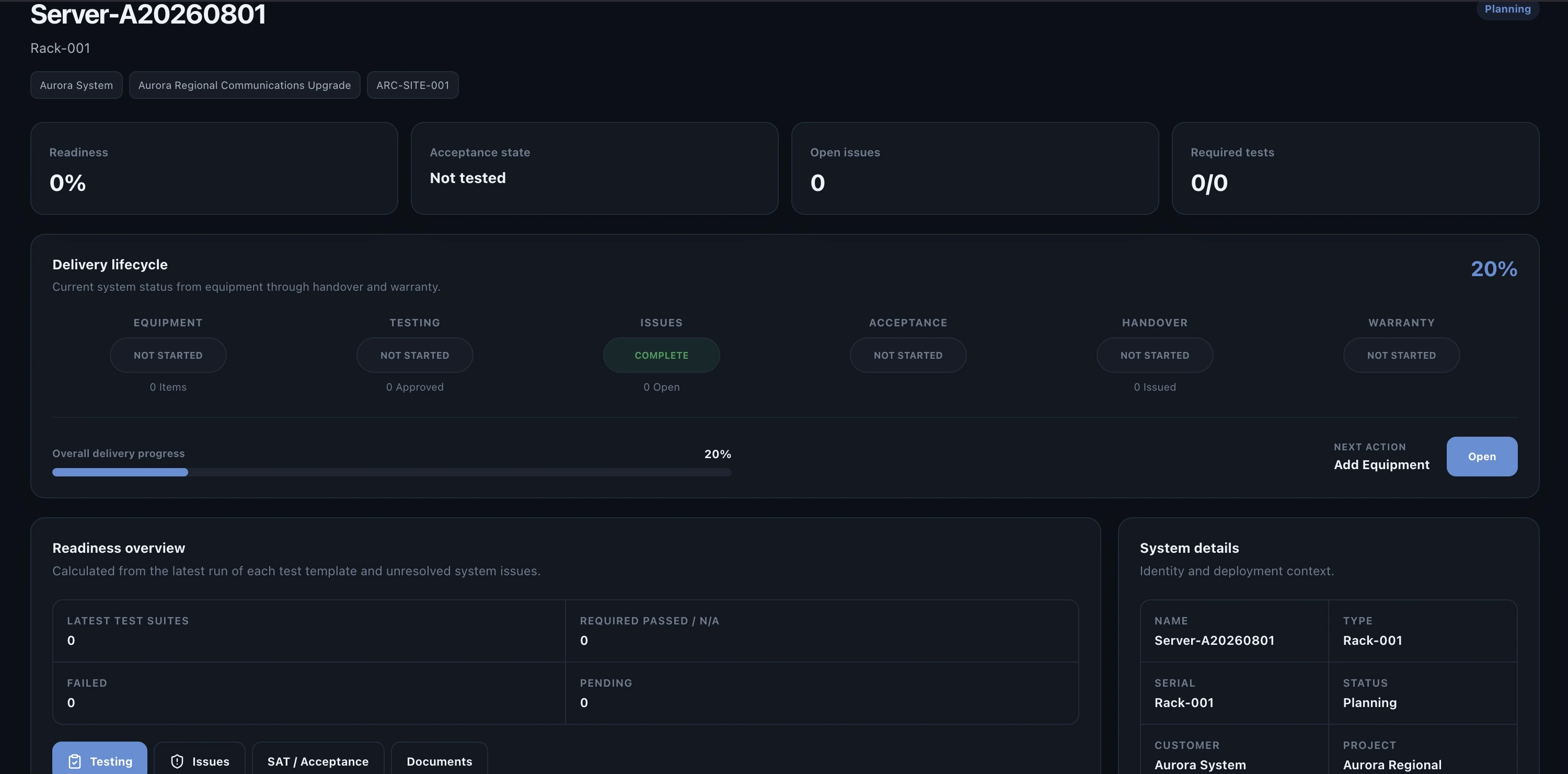
Keep the system identity stable
The delivered system should remain the stable anchor. Test runs can change, equipment can be replaced and issues can open and close, but the project should retain one authoritative record that explains the system's lifecycle.
Carry evidence and exceptions forward
An exception discovered during FAT may be accepted for shipment but still require verification during SAT. A site issue may require a commissioning retest. Those relationships are difficult to manage if each test stage is treated as a separate administrative universe.
| Stage | What should carry forward |
|---|---|
| FAT | System identity, configuration, evidence and accepted exceptions |
| SAT | Factory context plus site results, failures and remediation |
| Commissioning | Installed state, operational dependencies and remaining issues |
| Acceptance | Complete history needed for the customer's decision |
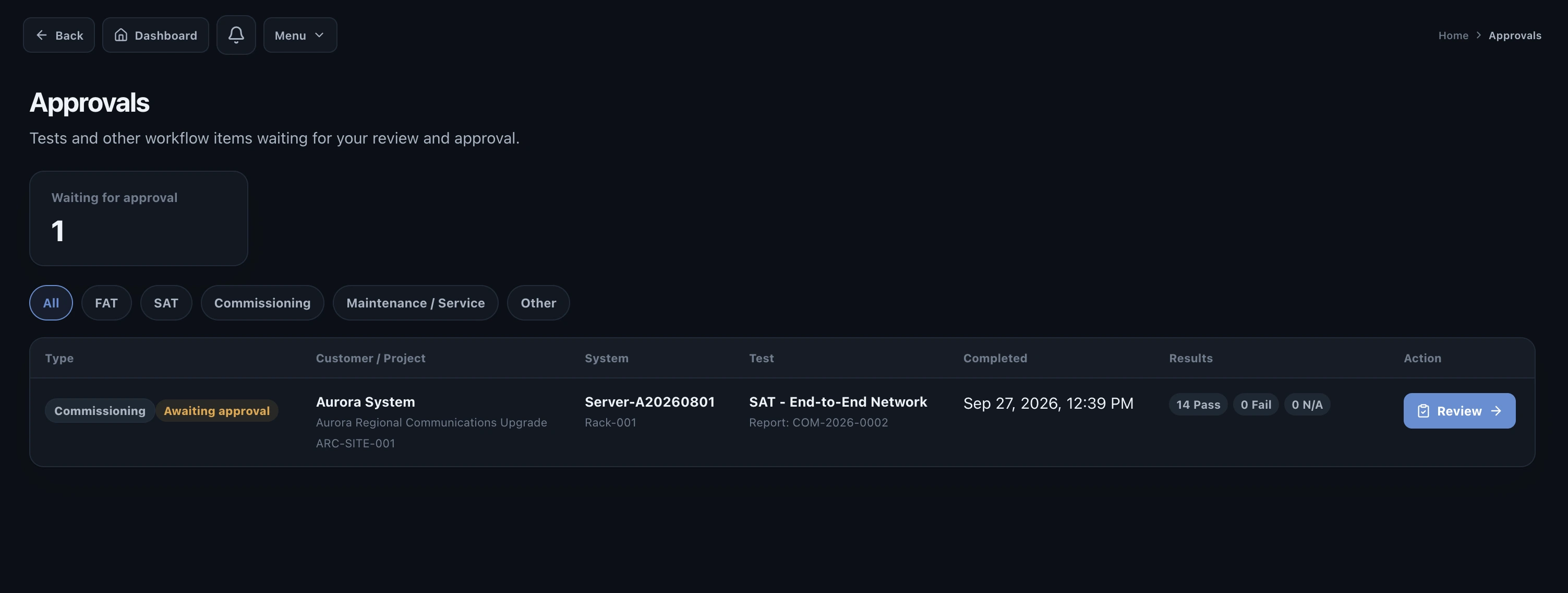
Approval should be part of the operational record
Approval becomes more meaningful when it is connected to the record being reviewed. The reviewer should be able to see the test results, failed items, remediation and evidence rather than approving a detached summary document.
One record does not mean one giant test procedure
FAT, SAT and commissioning should still have separate procedures, sections and acceptance criteria. The advantage of a shared operational record is not that every stage becomes identical. It is that the project does not lose context when the stage changes.
How Valtoroq structures testing
Valtoroq supports distinct FAT, SAT and commissioning test libraries while tying every run to the relevant project, site and system. The platform then connects failures to issues, issues to remediation, completed work to approvals and the approved record to acceptance and handover.
That model is intended to give smaller technical teams the control normally associated with much larger enterprise systems without forcing them to maintain multiple disconnected tools.