
Building a complete technical handover record
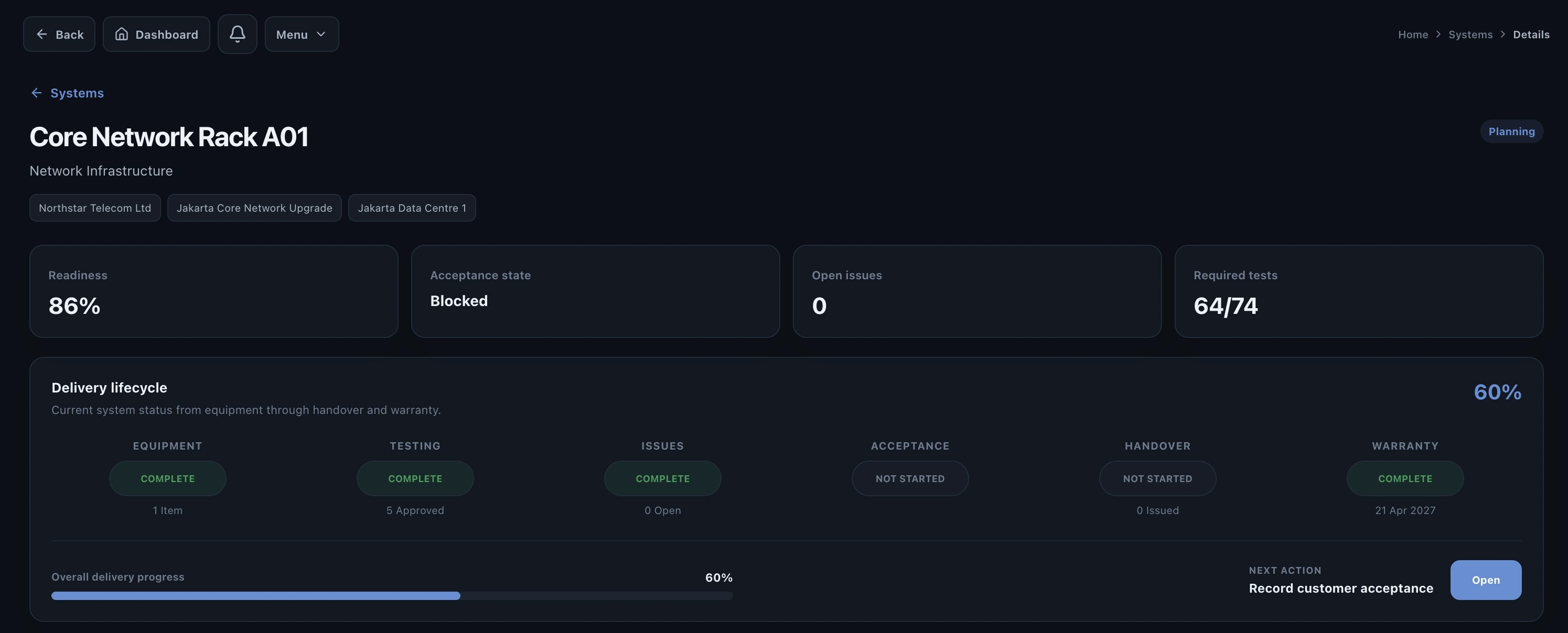
A handover package is strongest when its contents are created as part of normal project execution. Tests, issues, approvals, equipment records and acceptance data should stay connected long before the final delivery milestone. When handover begins only after the technical work is finished, teams are forced to reconstruct months of project history under deadline pressure.
Why handover becomes a project risk
Many technical projects are well controlled during design and installation but become surprisingly fragile at closeout. Test results are stored in spreadsheets, signed pages are attached to email threads, equipment lists live in a separate workbook and unresolved issues sit in meeting notes. Each item may exist somewhere, yet no one can see whether the handover record is actually complete.
The problem becomes visible when the customer asks a simple question: can you show me the final record for this exact system? If the answer requires several people to search folders and reconcile versions, the project does not have a controlled handover record.
Treat handover as a live record
Handover should start when the project starts. The project, site and system structure should already know what equipment is being delivered, which test stages are required, which documents will be needed and what approval path leads to acceptance. Every completed activity can then contribute to the final package.
- Equipment and system identity should be established before testing begins.
- Test evidence should remain attached to the relevant system and run.
- Issues should show their resolution and retest context.
- Approvals should be visible as part of the same delivery record.
- Required documents should have a clear status before the final week.
Keep evidence tied to the system
A file name can tell you very little about why a document matters. Evidence is more useful when it remains attached to the system, test, issue or approval that created it. That relationship lets a reviewer understand what happened without relying on institutional memory.
What a technical handover package should contain
| Area | Typical content |
|---|---|
| System record | System identity, site, configuration and equipment |
| Testing | FAT, SAT, commissioning results and supporting evidence |
| Issues | Failures, corrective actions, retests and accepted exceptions |
| Approvals | Review decisions, dates and accountable users |
| Documents | Manuals, drawings, certificates, warranties and procedures |
| Acceptance | Customer sign-off and any agreed outstanding items |
| Audit history | Key changes, approvals and lifecycle events |
The exact content depends on the project, but the principle is consistent: the final pack should reflect the controlled delivery record rather than introducing a second version of the truth.
Control outstanding items instead of hiding them
Not every project reaches acceptance with absolutely zero open items. Minor exceptions may be accepted if they do not prevent the system from being used and if the customer agrees how they will be closed. The important point is that those items remain explicit, owned and visible.
- Identify the exception
Describe what remains incomplete and why it does not block operational use.
- Assign ownership
Give the item an accountable owner and expected completion date.
- Record acceptance
Capture the customer's acknowledgement rather than relying on meeting minutes.
- Close the record
Retain the final resolution so the post-handover history remains complete.
How Valtoroq makes handover an output of delivery
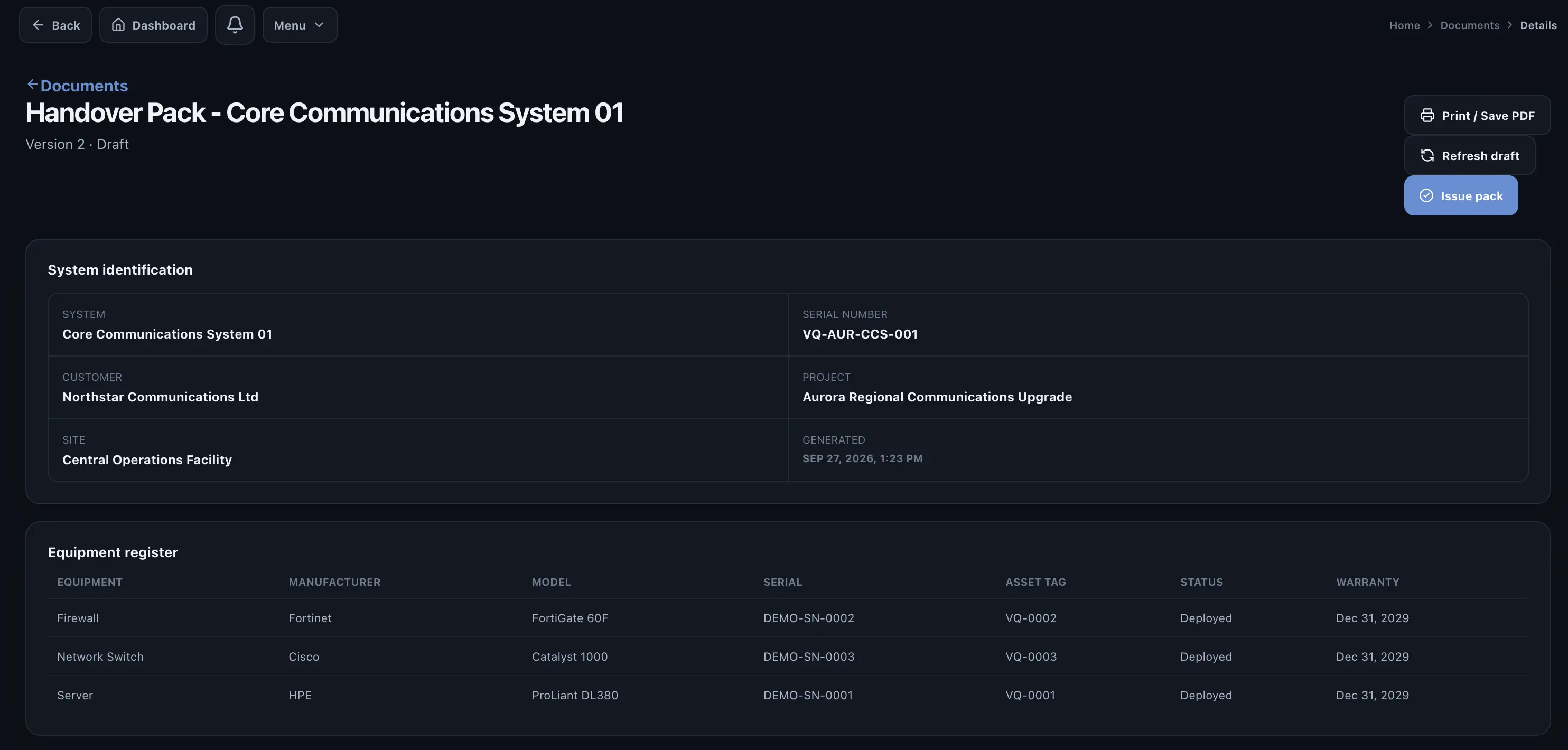
Valtoroq connects projects, sites, systems, equipment, testing, issues, approvals, acceptance and documents. That structure means a delivery team can build the final record progressively rather than starting a separate handover exercise at the end.
For small and medium technical organizations, this is particularly important. The goal is not to introduce enterprise bureaucracy. It is to give a small team enough structure that project knowledge does not depend on one engineer remembering where the latest spreadsheet or signed document was saved.