
Seven reasons technical projects get stuck at customer sign-off
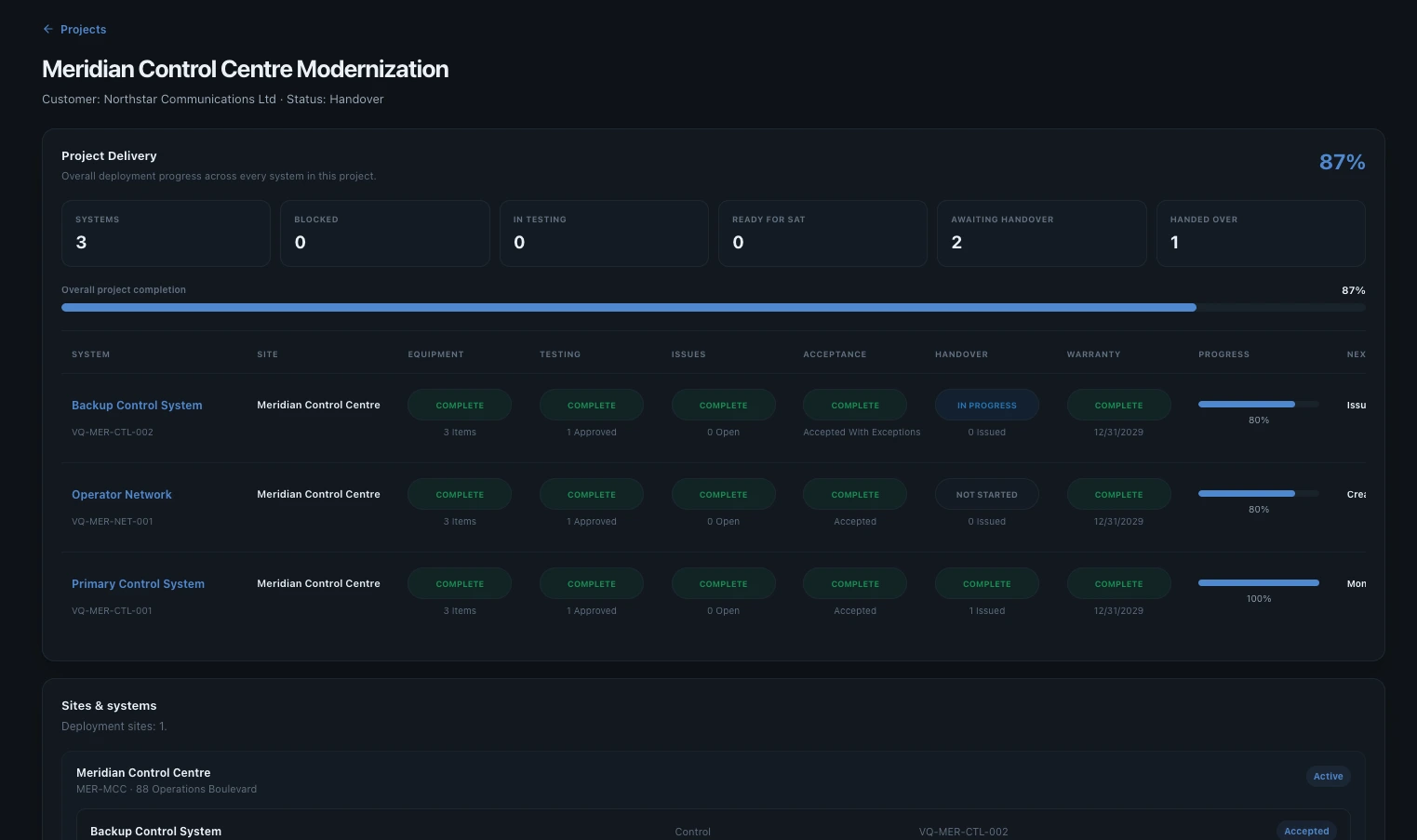
A project rarely reaches the acceptance meeting in perfect condition and suddenly becomes delayed for no reason. Most sign-off problems are visible earlier, but the team does not have a shared view of them. Understanding the common failure patterns makes acceptance far easier to manage.
1. The final system record does not match what was installed
Equipment may have been replaced, serial numbers may have changed or the final configuration may differ from the original deployment plan. If the acceptance package still reflects the planned state, the customer has a legitimate reason to stop and ask for clarification.
2. Test evidence cannot be found quickly
The team may know that a test passed, but the customer needs evidence that can be reviewed. Searching chat messages, email attachments or personal folders during an acceptance meeting undermines confidence even when the technical work was completed correctly.
3. Failed tests were corrected but not retested
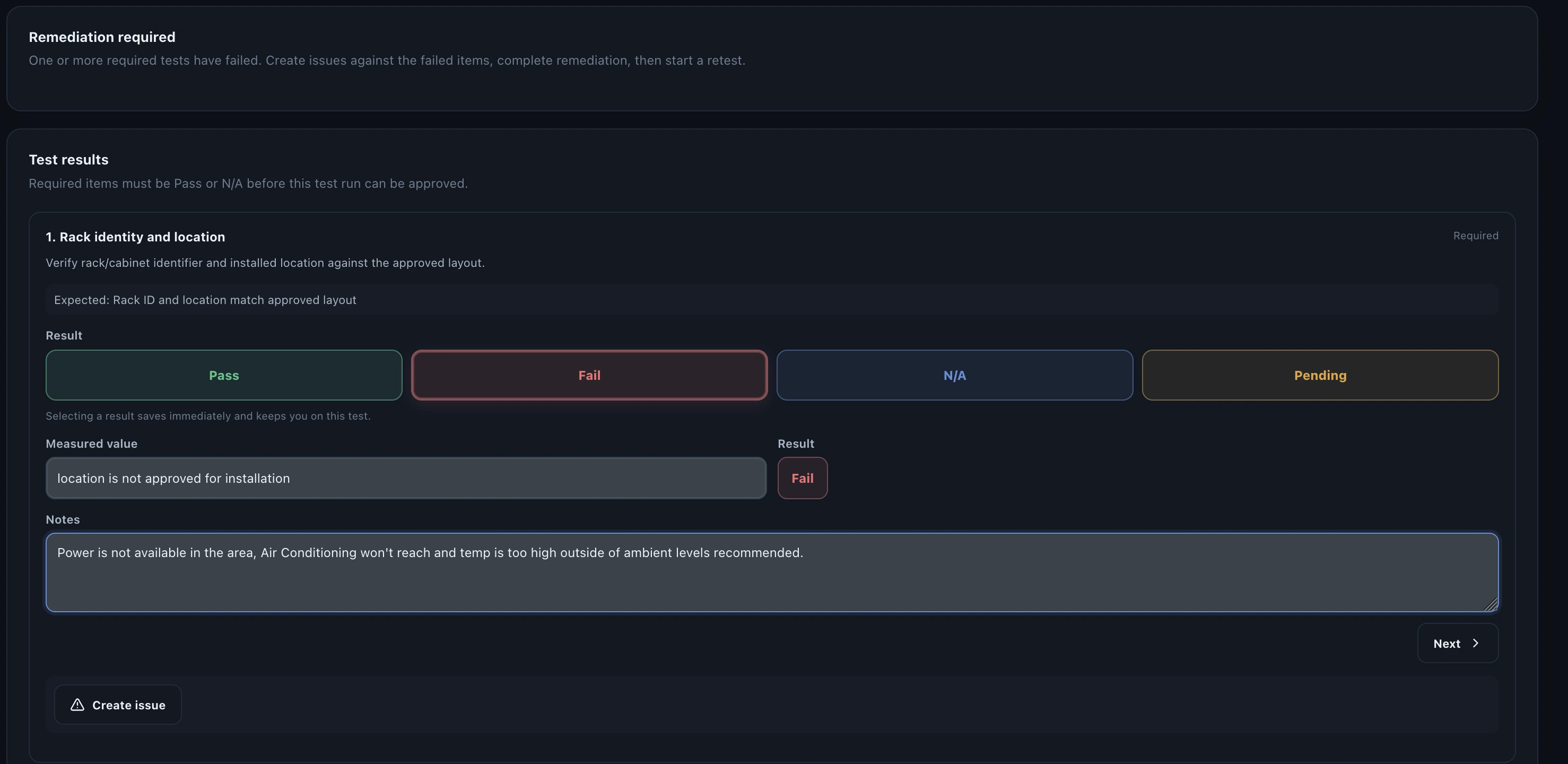
Corrective work is not the same as verification. If the record shows that something failed and somebody later marked the issue resolved, the customer may still reasonably ask for the new test result that proves the requirement now passes.
4. Open issues have no agreed disposition
A minor item does not always need to block sign-off, but it needs an explicit status. The customer should know whether the issue is blocking, accepted as an exception, scheduled for later closure or no longer applicable.
5. Required approvals are missing
A test can be technically complete while still waiting for the required reviewer. If approval is treated as a separate email process, teams often discover the gap only when preparing the final package.
6. Handover documents are assembled too late
Manuals, certificates, drawings, warranties and final reports are frequently treated as end-of-project paperwork. If the project waits until sign-off week to check them, missing items can delay acceptance even though the system itself is operating correctly.
7. Nobody can show a single readiness view
The project manager has one spreadsheet, QA has another, engineers have test files and the customer has a list of concerns in email. Without one shared readiness view, the acceptance meeting becomes an exercise in reconciliation.
Turn sign-off into a controlled decision
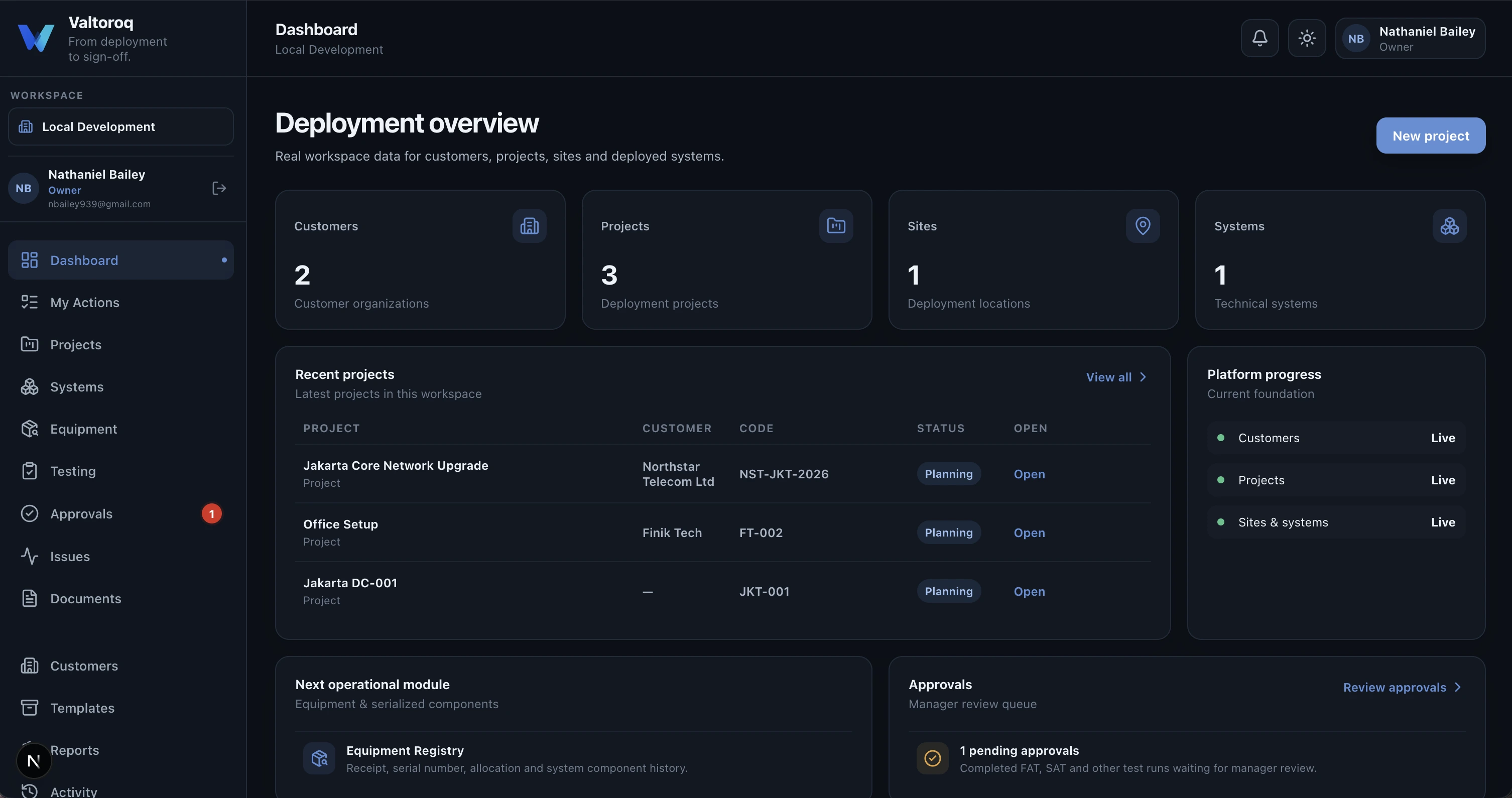
Valtoroq is designed to make these dependencies visible throughout delivery. The acceptance record sits on top of the same project, system, testing, issue and approval history used by the delivery team. That means sign-off becomes a review of controlled information rather than a last-minute attempt to assemble it.