
How small system integrators can get enterprise discipline without enterprise software
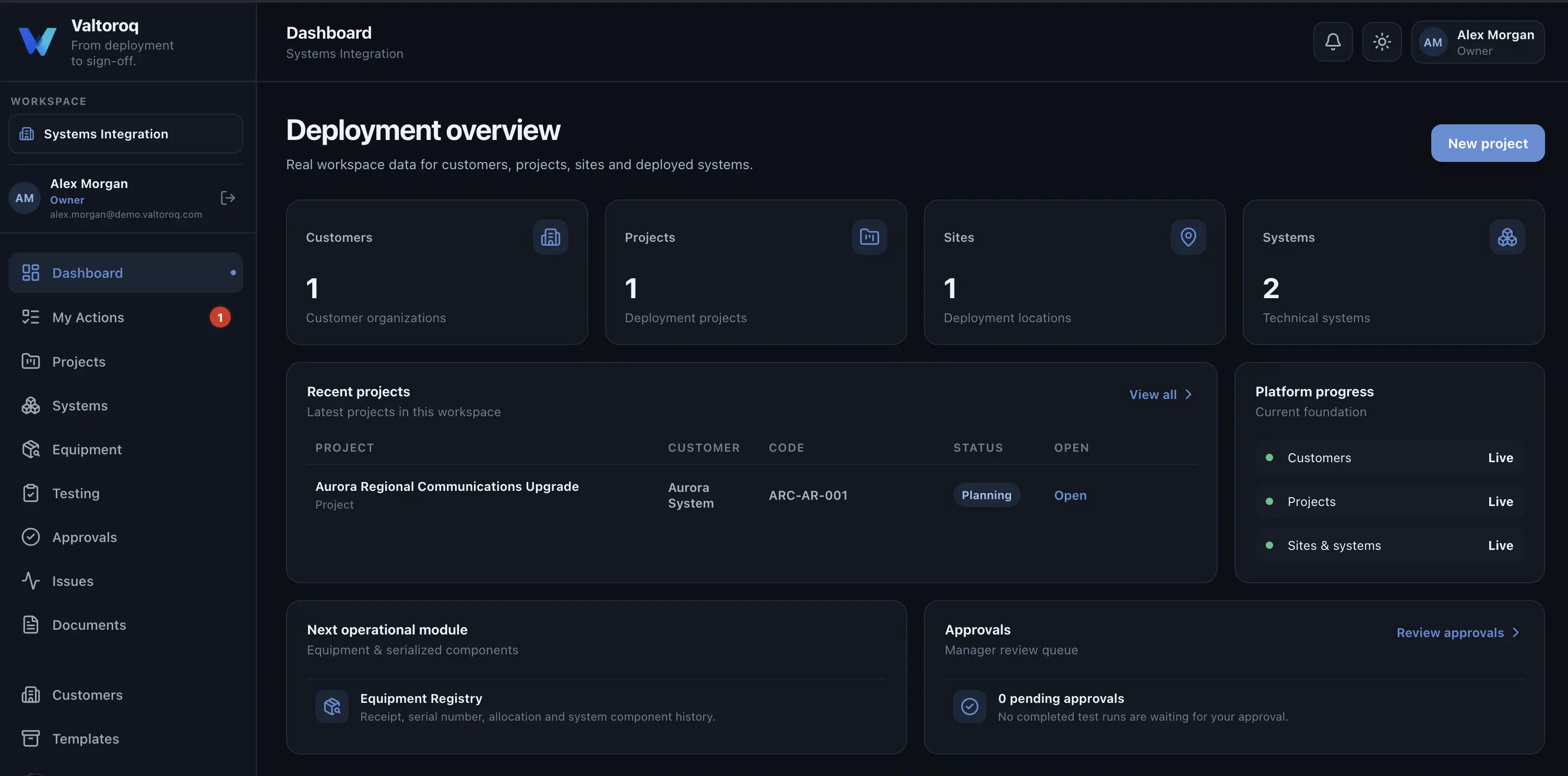
Small and medium system integrators often live between two uncomfortable choices. Spreadsheets and shared folders are inexpensive but increasingly fragile as the company grows. Large enterprise platforms offer powerful controls but can introduce costs, configuration and administrative overhead that are out of proportion to the size of the team.
What growing technical companies actually need
A growing integrator does not necessarily need dozens of modules. It needs confidence that key operational records are current, accessible and connected. That includes knowing what was delivered, what was tested, what failed, who owns the correction, what has been approved and whether the customer can sign off.
- A shared source of truth for projects and systems.
- Repeatable test and approval workflows.
- Clear ownership of issues and actions.
- Documents and evidence connected to the work they support.
- Permissions appropriate to different users and customers.
- Enough audit history to explain what changed and who approved it.
- Simple reports without maintaining a second reporting spreadsheet.
What small teams do not need
The answer is not to reproduce every process used by a global enterprise. Small businesses lose the advantage of being agile if every change requires a consultant, every workflow has twenty mandatory fields and every new user needs a week of training.
Start with the operational record
The most valuable first step is often replacing fragmented project records with one connected model. A project contains sites. Sites contain systems. Systems have equipment, tests, issues, documents and approvals. Once those relationships are controlled, dashboards and reports become outputs rather than separate administrative tasks.
Standardize only what should be repeatable
Templates are useful for recurring work such as FAT, SAT and commissioning. They reduce reinvention and help new employees follow the same expectations as experienced staff. But site-specific observations, evidence and issues should remain flexible within that structure.
Make accountability visible
A small company often relies heavily on trusted people. That works until the team grows, someone is unavailable or several projects run in parallel. Ownership should be visible in the system rather than living in one manager's memory.
| Question | What the platform should show |
|---|---|
| Who owns this issue? | Named assignee and current status |
| Why is this system not ready? | Failed/incomplete tests and blockers |
| Who approved the test? | Reviewer and approval timestamp |
| What changed? | Relevant history and updated records |
| Can we hand over? | Acceptance prerequisites and outstanding items |
Why Valtoroq was built this way
Valtoroq grew from years of working inside small startups and growing technical companies where spreadsheets, forgotten documents and missed deadlines were familiar operational hurdles. The platform was first used internally to create the kind of structure we needed without adopting an oversized enterprise system.
That remains the product philosophy: give smaller organizations professional deployment, testing, remediation, acceptance and handover tools at a price and level of complexity that make sense for the people actually using them.