
FAT and SAT Evidence Checklist for Customer Acceptance
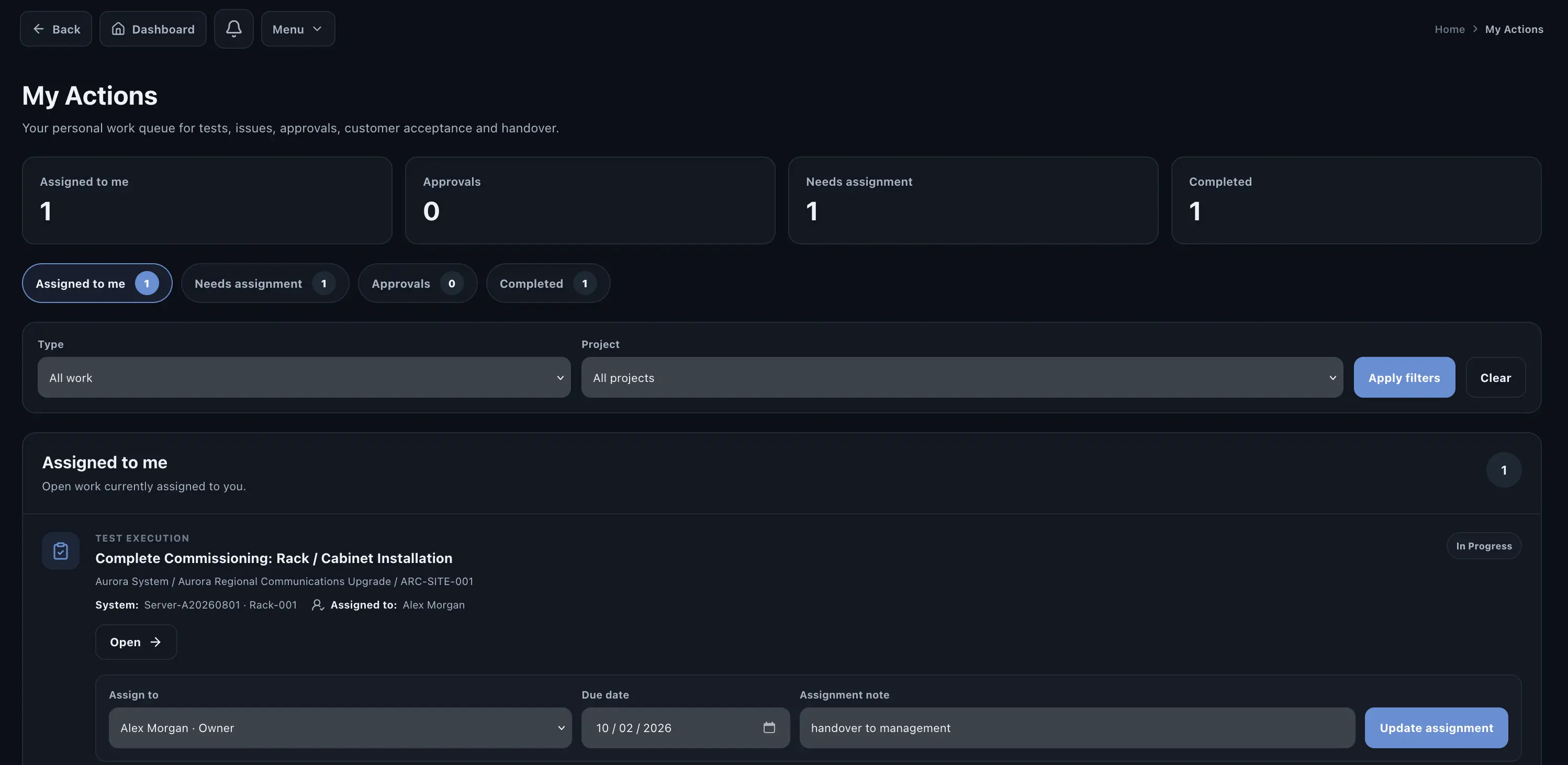
The most difficult part of customer acceptance is often not performing the test but proving what was tested, what happened and what was approved. Consistent evidence collection during FAT and SAT reduces the scramble to reconstruct delivery history at handover.
Define the evidence rule before testing starts
An approved test procedure should state the acceptance criteria and evidence needed to demonstrate them. If a network check requires a measured value, a simple 'pass' may not be enough. If visual inspection is acceptable, a clear photograph with system context may be appropriate. Agree on requirements with the customer or designated reviewer before execution.
Minimum FAT and SAT record checklist
- Project, site and system identification, including equipment reference where relevant.
- Test name, unique identifier and procedure revision.
- Execution date, operator and test environment.
- Expected acceptance criteria and actual measured or observed results.
- Pass, fail or not-applicable status with an explanation where necessary.
- Attachments such as screenshots, logs, readings and photographs, with sufficient context.
- Issue reference for every failed or blocked test.
- Retest history showing the original failure and later outcome.
- Reviewer identity, decision and approval date.
- Any remaining exceptions, agreed limitations or outstanding work items.
Preserve the difference between FAT and SAT
Factory acceptance demonstrates that a system meets agreed conditions in a controlled setting. Site acceptance evaluates it in the installed environment and with relevant interfaces. A previous FAT pass can inform SAT planning, but it does not automatically prove that site-specific integration, cabling, power, networking or end-to-end behavior is correct.
| FAT focus | SAT focus |
|---|---|
| Configuration and intended functionality | Installed interfaces and site dependencies |
| Factory test conditions | Actual operational environment |
| Factory deviations and fixes | Site findings and retest evidence |
| Readiness for delivery | Readiness for operational acceptance |
Handle failed tests without rewriting history
- Record the original result
Keep the test outcome and supporting evidence intact.
- Open a tracked issue
Assign responsibility, priority and a clear description of the defect.
- Document the fix
Capture changes and any impact on other systems or procedures.
- Perform and record the retest
Add a new result linked to the earlier failure; do not replace it.
- Approve the final disposition
Record the reviewer decision, including accepted exceptions when applicable.
Prepare the acceptance package continuously
Build the handover pack throughout the project, not at the end. Keep approved test records, issue dispositions, relevant equipment documentation, configuration references and acceptance decisions associated with the appropriate project and system. A complete package should make it possible for another engineer or reviewer to understand the delivery record without interviewing the entire team.
Adapt the checklist to the actual procedure
The list above is recommended project evidence, not a claim that every entry is a mandatory built-in field. Agree the procedure, roles and acceptance criteria for the system, then use the supported fields and documents to record the required evidence. Check an actual completed example with the reviewer before reusing the checklist across sites.
Using one delivery record
Valtoroq connects FAT, SAT and commissioning tests with issue remediation, reviews, documents and customer acceptance. Keeping these records together supports a clearer audit trail and reduces duplicated reporting effort.